

Etsy print on demand lets you sell custom products like t-shirts, mugs, and posters without holding stock. A partner company prints and ships each order only after a customer buys, so you focus on design and marketing while they handle production. Net margins usually land between 20 and 35 percent after product cost and Etsy fees.
Print on demand (POD) is one of the lowest-risk ways to start an Etsy shop. You do not buy inventory up front, you do not pack boxes, and you can test a dozen designs in a weekend. The catch is that low barriers mean heavy competition, so the sellers who win are the ones who pick products people already want and price them with real numbers, not guesses. This guide walks you through how POD works on Etsy, which products earn, how to choose a provider, what margins to expect, and how to use live demand data to avoid listing things nobody searches for.
How does print on demand work on Etsy?

With Etsy print on demand, you connect a production partner to your shop, upload your artwork onto blank products in their catalog, and publish listings. When a buyer orders, the partner automatically receives the order, prints your design, and ships it under your shop name. You never touch the product. Your job is the design, the listing, the keywords, and the customer service.
The flow looks like this in practice:
- You create a design (artwork, text, or a graphic) sized for the product.
- You apply it to a blank item in your provider’s catalog and set your retail price.
- The listing syncs to Etsy with mockups and a product description.
- A customer buys. Etsy collects payment and passes the order to your provider.
- The provider charges you the base cost, prints, and ships. You keep the difference minus Etsy fees.
Because production only starts after a sale, your only real costs before that point are the $0.20 Etsy listing fee and your time. That is what makes the model approachable for new sellers who want to test ideas cheaply. If you are still deciding what direction to take your shop, our guide on what to sell on Etsy pairs well with the product list below.
📌 Did You Know?
The global print-on-demand market was valued at roughly $10.8 billion in 2025 and is projected to reach $57.5 billion by 2033, growing about 23.6 percent per year, according to Grand View Research. Apparel held the largest share at 39.5 percent in 2025, which is why t-shirts and hoodies stay so crowded on Etsy.
Best print on demand products to sell on Etsy
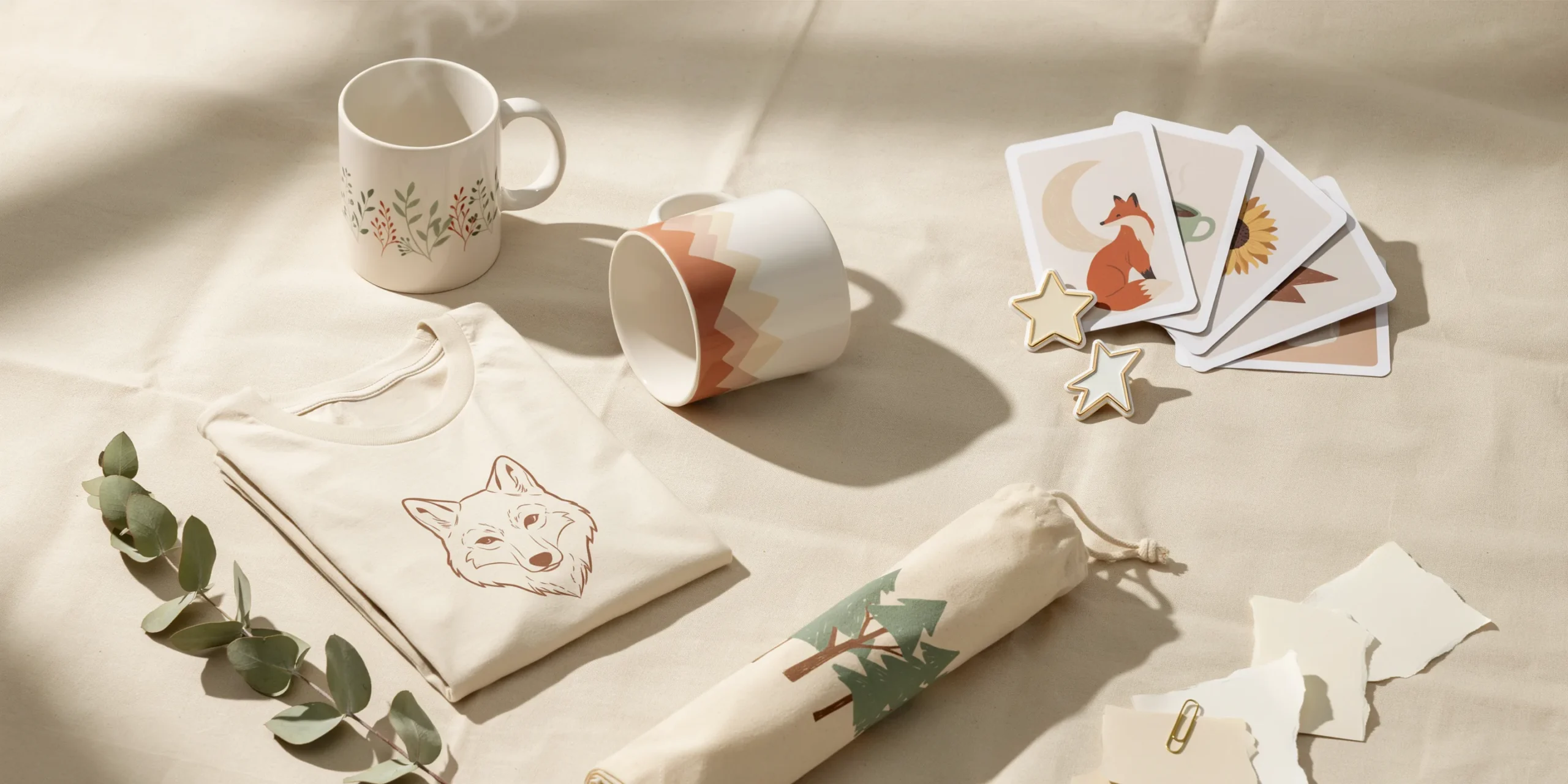
The best POD products combine steady demand, a price point that survives Etsy fees, and room for design creativity. Apparel gets the most attention, but the highest-margin wins often come from smaller items like mugs and stickers. Here is how the most popular categories compare on typical economics.
Product economics at a glance

The ranges below reflect common base costs across major POD suppliers and the retail prices Etsy buyers usually accept. Treat them as starting points, then confirm against your own provider’s live pricing.
| Product | Base cost | Common retail | Rough margin | Best for |
|---|---|---|---|---|
| T-shirt | $8 to $12 | $22 to $28 | 25 to 40% | Niche slogans, fan art |
| Hoodie | $20 to $28 | $40 to $55 | 25 to 35% | Higher order value |
| Mug (11oz) | $4 to $7 | $14 to $20 | 40 to 55% | Gifts, quotes, hobbies |
| Poster / wall art | $5 to $15 | $18 to $35 | 25 to 45% | Home decor, typography |
| Tote bag | $7 to $12 | $18 to $26 | 30 to 45% | Everyday graphics |
| Sticker | $1 to $2 | $4 to $8 | 50 to 65% | Impulse buys, bundles |
| Phone case | $8 to $13 | $20 to $30 | 30 to 45% | Pattern and art designs |
Two patterns stand out. Small items (mugs, stickers) hold the fattest margins but sell at low prices, so you need volume. Apparel (shirts, hoodies) carries a higher ticket but thinner margins and the most competition. A balanced shop often runs a few hero apparel designs plus mugs and stickers that lift the average order value through bundles.
💡 Seller Tip
A common move among top POD sellers is to launch one design across three products at once, say a mug, a shirt, and a poster, then double down on whichever one gets favorites and sales first. You learn what your audience actually wants to buy instead of betting everything on a single format.
For a deeper read on validating ideas before you commit design time, see our walkthrough on Etsy product research.
How to choose a print on demand provider
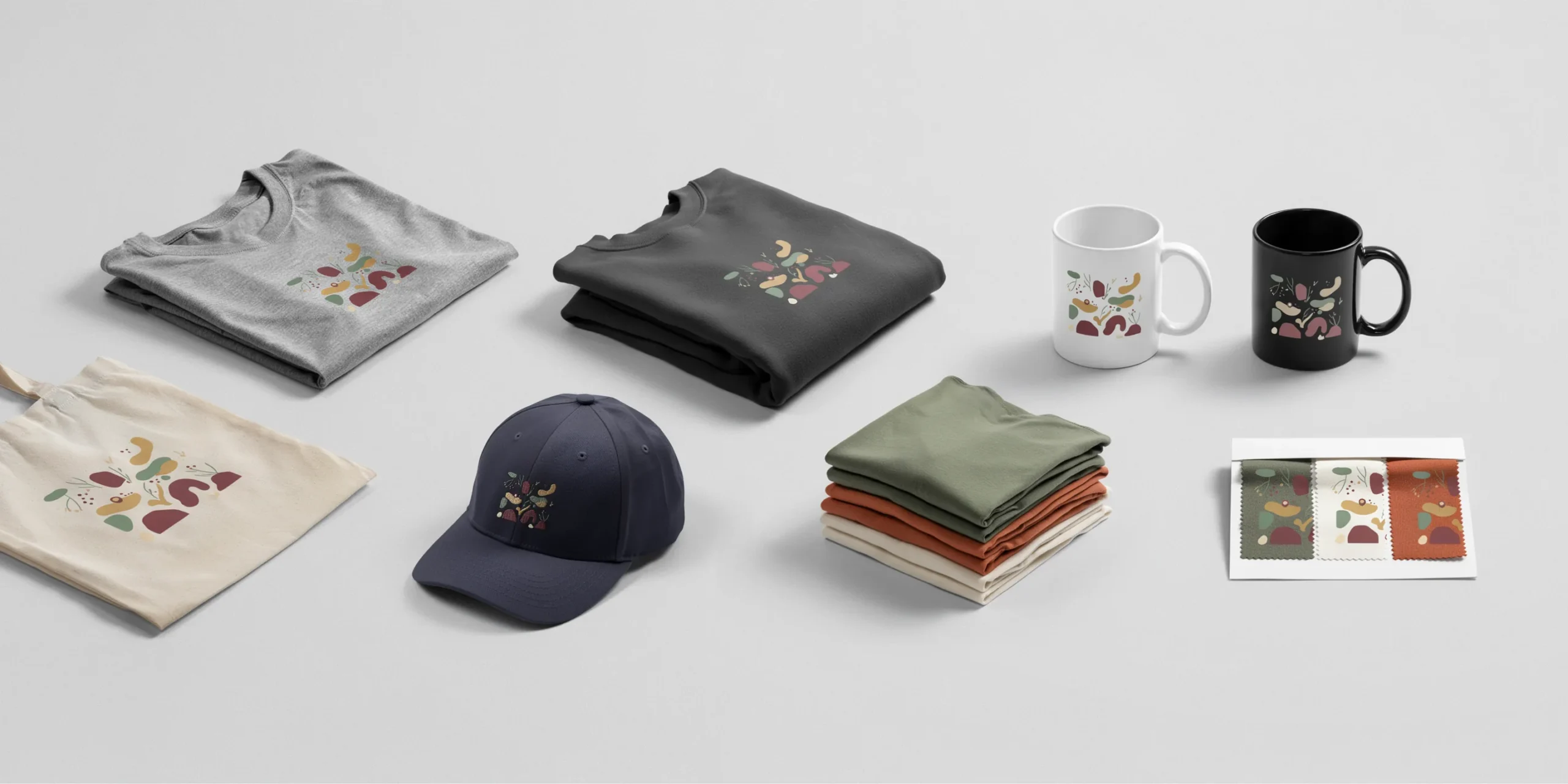
Your provider decides your base cost, print quality, shipping speed, and which products you can even offer. Most Etsy sellers start with one of four well-known partners and add a second later for backup or wider catalogs. Here is a high-level view, without endorsing any single option.
| Provider | Catalog | Model | Often chosen for |
|---|---|---|---|
| Printify | Very wide, many factories | Network of print partners | Low base costs, choice |
| Printful | Broad, in-house | Owned facilities | Consistent quality control |
| Gelato | Global, local printing | Worldwide print network | Faster international shipping |
| SPOD | Focused apparel | Spreadshirt-owned | Quick production times |
When you compare partners, weigh four things in order: print quality (order a sample of your own design), base cost against your target retail price, production plus shipping time to your main market, and how cleanly the integration syncs orders to Etsy. Shipping time matters more than new sellers expect, because Etsy ranks and rates shops partly on delivery experience.
⚠️ Common Mistake to Avoid
Picking a provider purely on the lowest base cost and skipping the sample order. Color shifts, off-center prints, and thin shirt fabric show up in reviews fast, and a few one-star ratings will sink a new POD shop. Order your top design from any provider before you trust them with live customers.
Print on demand profit margins on Etsy

Most POD sellers overestimate profit because they subtract only the base product cost and forget Etsy’s fees. On a typical sale you pay three mandatory fees: a $0.20 listing fee, a 6.5 percent transaction fee on the item plus shipping, and a payment processing fee of 3 percent plus $0.25 in the US. Together that is roughly 9.5 percent plus $0.45 per order, per Etsy’s official fee basics and its payment processing fee page.
Here is what a single $25 t-shirt sale actually looks like before you celebrate:
🔢 Quick Numbers
- $25 sale, $10 shirt base cost (provider charge)
- Etsy fees: $1.63 transaction + $1.00 payment + $0.20 listing = about $2.83 (per Etsy Help, 2026 US rates)
- Net profit: roughly $12.17, or about a 49% gross margin before ads and returns
- Add Etsy Offsite Ads (12 to 15%, mandatory above $10,000 a year) and that margin tightens further
That example looks healthy, but plenty of sellers price the same shirt at $18 to compete, which can cut take-home profit close to break-even once ads and the occasional refund hit. The fix is pricing from total landed cost, base price plus every fee plus a buffer for marketing, then setting retail to hold a 25 to 35 percent net margin. Strong titles and tags also reduce how much you lean on paid ads, so our Etsy SEO guide is worth a read before you publish.
💡 Seller Tip
Before you set a price, run one mock order through your provider’s checkout to capture the real base cost plus shipping, then add Etsy’s 9.5 percent plus $0.45. Build your retail price up from that total. Pricing down from a number you wish you could charge is how shops end up working for free.
Choosing a design and niche that actually sells
A good niche gives you a clear buyer, a reason to come back, and room to add more designs later. Broad ideas like “funny shirts” force you to compete with thousands of shops on price. A specific angle like “gifts for night-shift nurses” or “hiking dog mom apparel” lets you speak directly to one person, rank for tighter keywords, and charge a little more because the design feels made for them.
Strong POD designs tend to share a few traits. They carry a clear message or identity the buyer wants to wear or display, they read well at thumbnail size in Etsy search, and they suit the product they sit on. Text-led designs print cheaply and convert fast for gifts and hobbies. Detailed illustrations work better on posters and tote bags where buyers slow down to look. Match the style to the format instead of forcing one artwork onto everything.
📈 Trend Signal
Personalized and occasion-based POD keeps gaining ground on Etsy, where the apparel segment alone held 39.5 percent of the global print-on-demand market in 2025 (Grand View Research). Add-a-name and add-a-date designs let one base product serve dozens of micro-niches, which is why personalization shows up repeatedly in fast-rising listings.
How to use live demand data to pick winning products
The biggest difference between a POD shop that earns and one that stalls is not design talent, it is product selection. Listing what looks nice is guessing. Listing what people are actively buying is a strategy. Etsy attracts a large, intent-driven audience, with around 86.5 million active buyers and roughly $11.9 billion in gross merchandise sales in 2025, so the demand exists. The skill is finding where it is moving right now.
Instead of copying last year’s “best POD products” listicle, look at current signals: which phrases are climbing in search, which niches show rising sales velocity, and which product formats a trend is landing on. A quote that sells as wall art today might convert better on a mug next quarter. Live data tells you which, so you design once and place it where buyers are looking.
See what’s selling on Etsy right now
Print on demand rewards sellers who design for proven demand instead of hunches. Podkon tracks live Etsy best-sellers and trends across every category, so you can spot demand before you list and put your art on the products buyers are already searching for.
A practical research loop: check what is currently selling on Etsy, confirm the product format buyers prefer for that niche, design two or three variations, and publish them with keyword-rich titles. Watch the first two weeks of views and favorites, then scale the winners and quietly retire the rest. You can see the full feature set behind that workflow on the Podkon features page.
✅ Key Takeaways
- Etsy print on demand needs no upfront inventory, only a $0.20 listing fee and your design time.
- Mugs and stickers hold the highest margins, while apparel carries higher prices and heavier competition.
- Compare providers on print quality, base cost, and shipping speed, and always order a sample first.
- Price up from total landed cost (base plus the roughly 9.5% plus $0.45 in Etsy fees) to protect a 25 to 35 percent net margin.
- Pick products from live demand signals, not old listicles, then test a few variations and scale the winners.