


Etsy seasonal preparation is not really about knowing when Christmas is. The question worth answering is when your competitors start listing for it, and a marketplace snapshot taken on 21 June answers that precisely: 5 of the 60 tracked categories already carried a Christmas term among their eight most used tags, six months before the season.
The evidence is in the tags, in midsummer
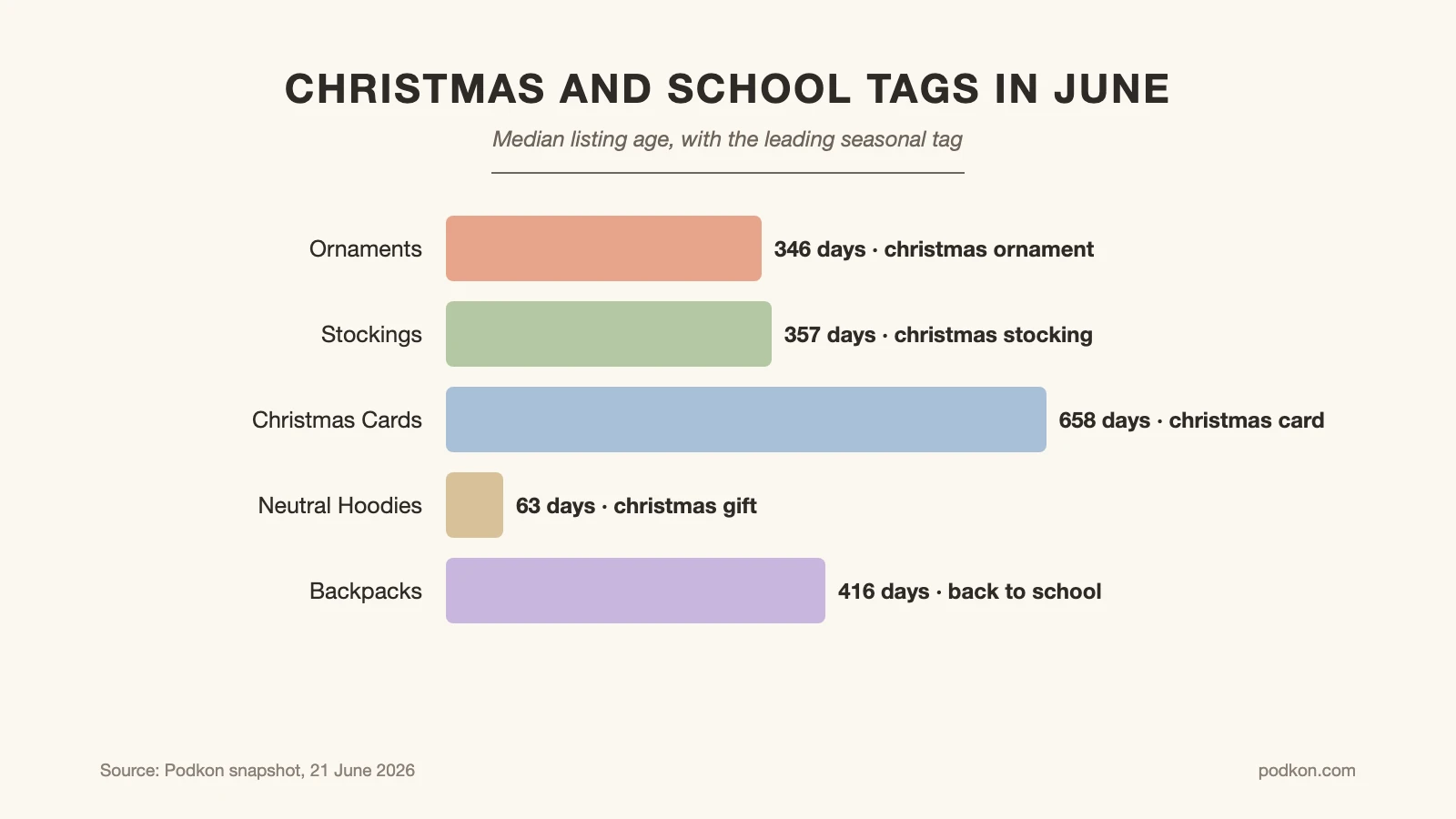
Tag frequency shows what sellers have written into live listings. In June, christmas ornament was the single most used tag in Ornaments, christmas stocking led Stockings, and christmas card led Christmas Cards. In apparel, christmas gift ranked fourth in Gender-Neutral Adult Hoodies and christmas sweatshirt seventh.
Etsy seasonal preparation is therefore not a September activity. In the categories that depend on a single season, the shelf competing for December search was already built by midsummer.
Seasonal terms already ranking in a June snapshot
| Category | Leading seasonal tag | Rank in top 8 | Median listing age |
|---|---|---|---|
| Ornaments | christmas ornament | #1 | 346 days |
| Stockings | christmas stocking | #1 | 357 days |
| Christmas Cards | christmas card | #1 | 658 days |
| Gender-Neutral Adult Hoodies | christmas gift | #4 | 63 days |
| Backpacks | back to school | #1 | 416 days |
🔢 Quick Numbers
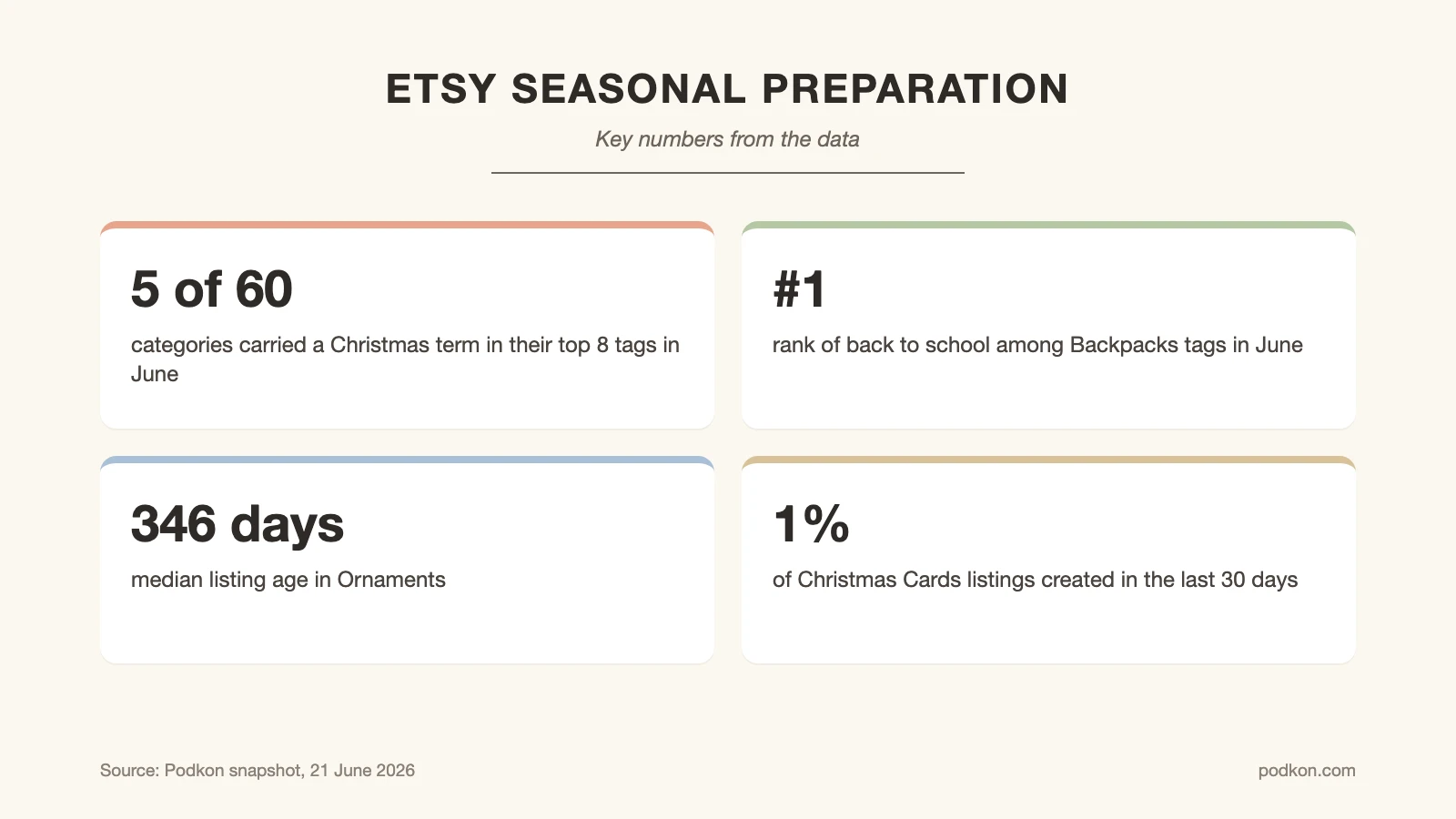
- 5 of 60 tracked categories carried a Christmas term in their top 8 tags in June (snapshot, 21 June 2026)
- Back to school was the single most used tag in Backpacks at the June snapshot (snapshot, 21 June 2026)
- Ornaments recorded a median listing age of 346 days, meaning most of its December inventory predates this year (snapshot, 21 June 2026)
- Christmas Cards had only 1% of listings created in the last 30 days, the lowest refresh rate measured (snapshot, 21 June 2026)
Why listing early buys something you cannot buy later
Etsy seasonal preparation buys one thing above all: view history. A listing published in October has none when December search begins. One published in July has five months of accumulated views, favourites and, if it sells at all, reviews. None of that can be added retrospectively.
The catalogue ages support the point. In Ornaments the median listing is 346 days old and only 2.1% were created in the last month. The competition for this December was not published this autumn.
💡 Pro Tip
Work backwards from the season, not forwards from today. For a December category, listings should exist by August at the latest, which means designs finished in July and stock ordered in June. The tag data shows competitors already there, and a listing published into an established field with no history behind it is starting a race that began months ago.
Back to school is the sharpest example
Back to school was the most used tag in Backpacks at a June snapshot, ahead of the product noun itself. The season runs roughly August to September, so the tag was leading its category a full two months before demand arrived.
That category also converts well, at 1.86 reviews per reviewed listing, with a $58 median and 58% of listings above fifty dollars. It rewards the preparation it demands.
📌 Did You Know?
Christmas Cards recorded the lowest catalogue refresh rate of all 60 categories measured, with only 1% of listings created in the previous thirty days and a median listing age of 658 days. In a category where designs date visibly by year, most of the shelf competing for this December was designed for an earlier one.
What a single snapshot cannot show
This measurement of etsy seasonal preparation establishes when sellers act. It does not measure when buyers purchase, because a June reading of a December category captures the annual floor rather than a curve. Anyone needing the demand shape should use Google Trends, which covers the full year for any specific term.
That division is worth keeping straight. The preparation calendar is a competitive fact you can act on; the demand calendar is a seasonal fact you already know.
📐 Technical Note
Listing fees are $0.20 with a four month expiry, per Etsy’s Fees and Payments Policy as last updated in February 2026. For seasonal categories that expiry needs planning: a listing published in July expires in November, in the middle of the selling window. Confirm auto renewal is on before the season rather than discovering it lapsed during one.
Where Etsy seasonal preparation matters most
Single season categories carry the whole burden: Ornaments, Stockings and Christmas Cards earn in one quarter and idle for three. Categories with a seasonal lift rather than a seasonal existence, such as apparel or cutting boards, have more forgiveness in the calendar but the same advantage available to whoever prepares first.
Our trends coverage follows what moves through the year, our product research method covers sizing a seasonal test, and our tag allocation guide covers rotating seasonal terms without losing the evergreen ones.
Etsy’s Seller Handbook covers preparing listings ahead of a peak, and Statista’s active seller series shows the competition preparing alongside you.
All category figures come from Podkon’s marketplace snapshot dated 21 June 2026 and describe the tracked listing sample, not all of Etsy. Etsy fee rates were current on the Fees and Payments Policy page as last updated 13 February 2026 and can change.
Where to Go From Here
Your Next Step: Pick your next season and count back four months from its first sales week. That is your listing deadline, not your design deadline. The tag data says your competitors are already working to it.