


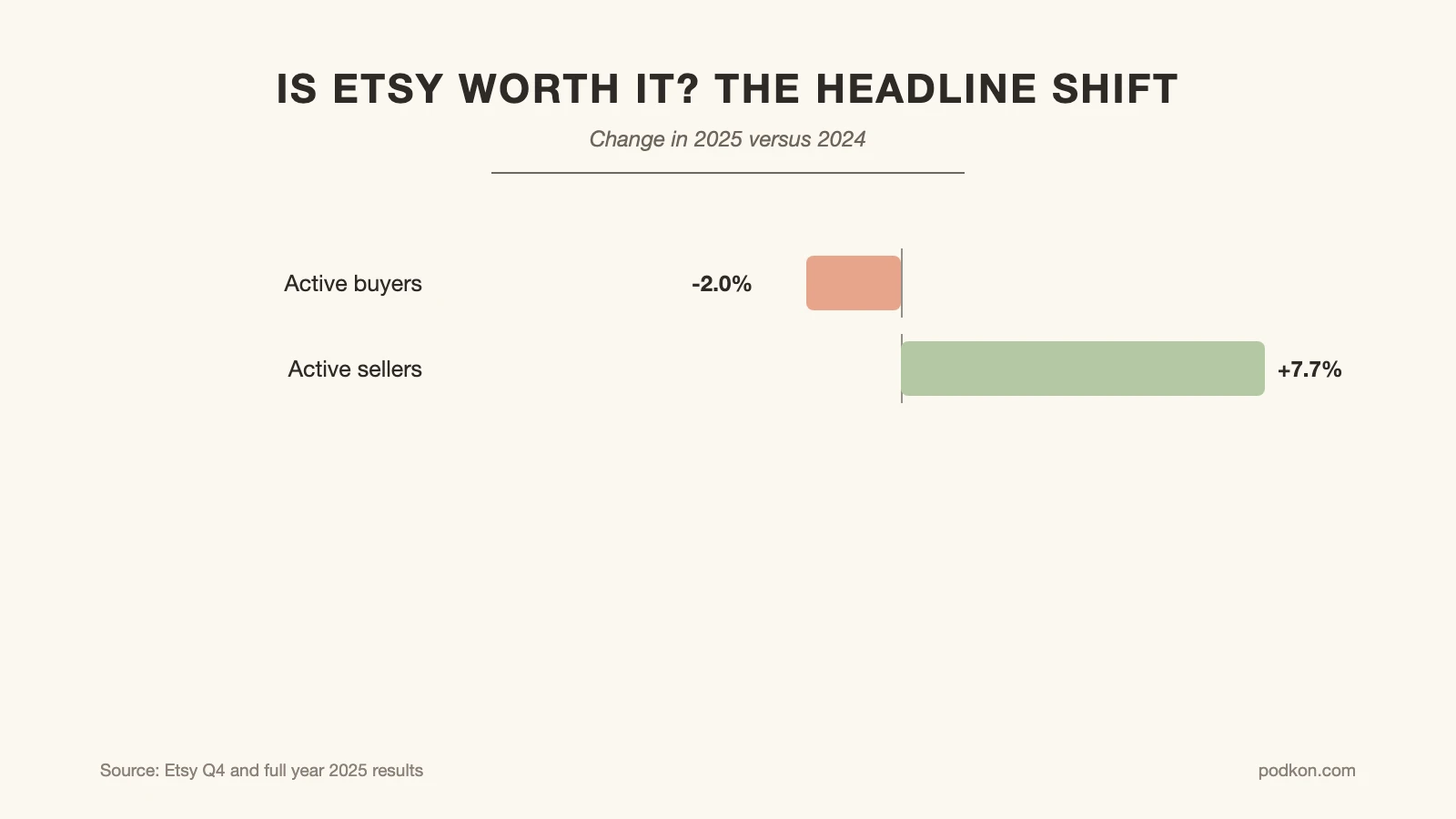
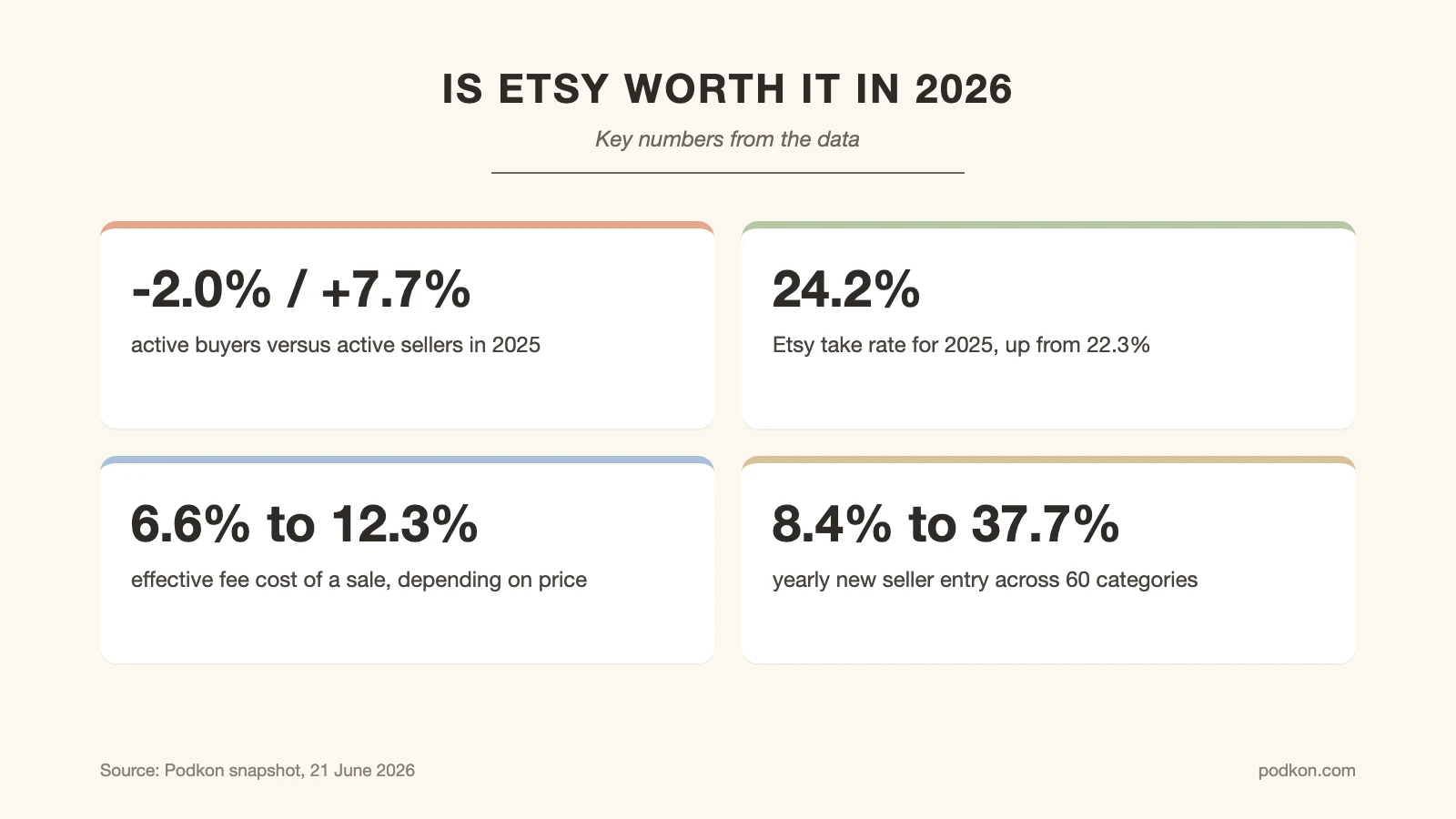
Is etsy worth it in 2026? The question is usually argued with anecdotes. It can be answered with four numbers instead: the buyer base fell 2.0% last year, the seller base rose 7.7%, the platform’s take rate reached 24.2%, and across 60 tracked categories new sellers are arriving at anywhere from 8.4% to 37.7% a year.
The case against, stated fairly
Etsy reported 93,539 thousand active buyers at the end of 2025, down 2.0%, against 8,762 thousand active sellers, up 7.7%. Consolidated sales fell 5.3% for the year. Take rate rose from 22.3% to 24.2%.
Read together, that is more competition chasing fewer buyers while the platform keeps a larger share of each sale. Anyone asking is etsy worth it deserves those numbers before any encouragement.
🔢 Quick Numbers
- Active buyers down 2.0%, active sellers up 7.7% in 2025 (Etsy Q4 and full year 2025 results)
- Take rate 24.2% for the full year against 22.3% the year before (Etsy Q4 and full year 2025 results)
- Effective fee cost ranges from 6.6% to 12.3% of a sale depending on price (snapshot, 21 June 2026; Etsy fee policy 13 February 2026)
- New seller entry ranges from 8.4% to 37.7% a year across 60 categories (snapshot, 21 June 2026)
The case for, from the same data
The seller base is growing 7.7% a year, which means people are still choosing this platform over the alternatives, and they are doing it after seeing the same fee schedule you can. Etsy remains a place where a single person with no marketing budget reaches buyers who are already shopping.
More usefully, the category data shows the pressure is not evenly distributed. In 31 of 60 tracked categories the median listing is over a year old, meaning much of the competition stopped publishing some time ago. An aging shelf is an opportunity, and it is common.
⚖️ Pros & Cons at a Glance
✔️ Pros: buyers arrive already intending to purchase, no marketing budget is required to start, entry costs are twenty cents a listing, and in most tracked categories the competing inventory is not being refreshed
✖️ Cons: the buyer base is shrinking while the seller base grows, take rate rose nearly two points in a year, fees fall hardest on low priced categories, and no seller controls the platform’s policy changes
It depends on the category, and that is measurable
Whether is etsy worth it has no single answer, because the economics differ fourfold between categories. Fee cost alone ranges from 6.6% of a sale in the most expensive categories to 12.3% in the cheapest, because the flat listing fee is regressive. Sales concentration ranges from 1.13 to 2.12 reviews per reviewed listing. Entry pressure ranges roughly fourfold.
A seller in a category with a high price point, low entry and an aging shelf is in a different business from one selling three dollar digital files in a market absorbing a third more competitors every year, even though both are on Etsy.
📌 Did You Know?
If the 2025 rates held for another year, buyers per seller would fall by roughly nine percent annually. That single ratio explains more about why individual shops report tougher conditions than any change in the search algorithm, and it is the strongest argument for choosing a category deliberately rather than by enthusiasm.
That ratio is also the reason the take rate figure gets misread so often.
📐 Technical Note
Take rate is a platform aggregate, not what any one seller pays. It combines listing fees, transaction fees, payments processing, advertising and services across all sellers. Someone using no advertising pays substantially less than 24.2%; someone relying on Offsite Ads at 15% can pay more. Etsy’s Fees and Payments Policy sets out the individual charges.
Is Etsy worth it for your shop? How to decide
Three questions settle whether is etsy worth it for you specifically. What is the median price in your category, because that determines what the fee structure costs you. What is the entry rate, because that determines how fast your position erodes. And how old is the median listing, because that tells you whether the incumbents are still competing.
Our beginners guide covers the mechanics of starting, our what to sell breakdown covers choosing where, and our fee breakdown covers what you actually keep.
Etsy’s Seller Handbook is the platform’s own guidance and Statista’s active seller series shows the longer run growth in competition.
All category figures come from Podkon’s marketplace snapshot dated 21 June 2026 and describe the tracked listing sample, not all of Etsy. Etsy fee rates were current on the Fees and Payments Policy page as last updated 13 February 2026 and can change.
Looking Ahead
The question is worth reframing. Etsy is not one market, it is dozens with wildly different economics, and the aggregate figures that dominate this debate describe none of them accurately. A seller who picks a category on price point, entry rate and shelf age is answering a question the platform level numbers cannot. A seller who picks on enthusiasm alone is trusting an average that, in this dataset, describes almost nothing real.