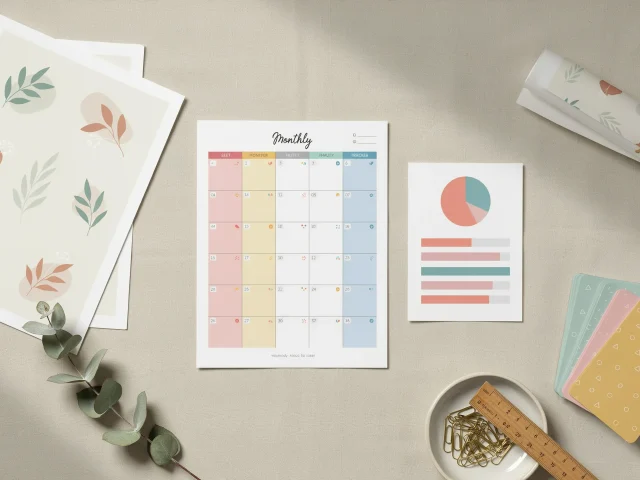

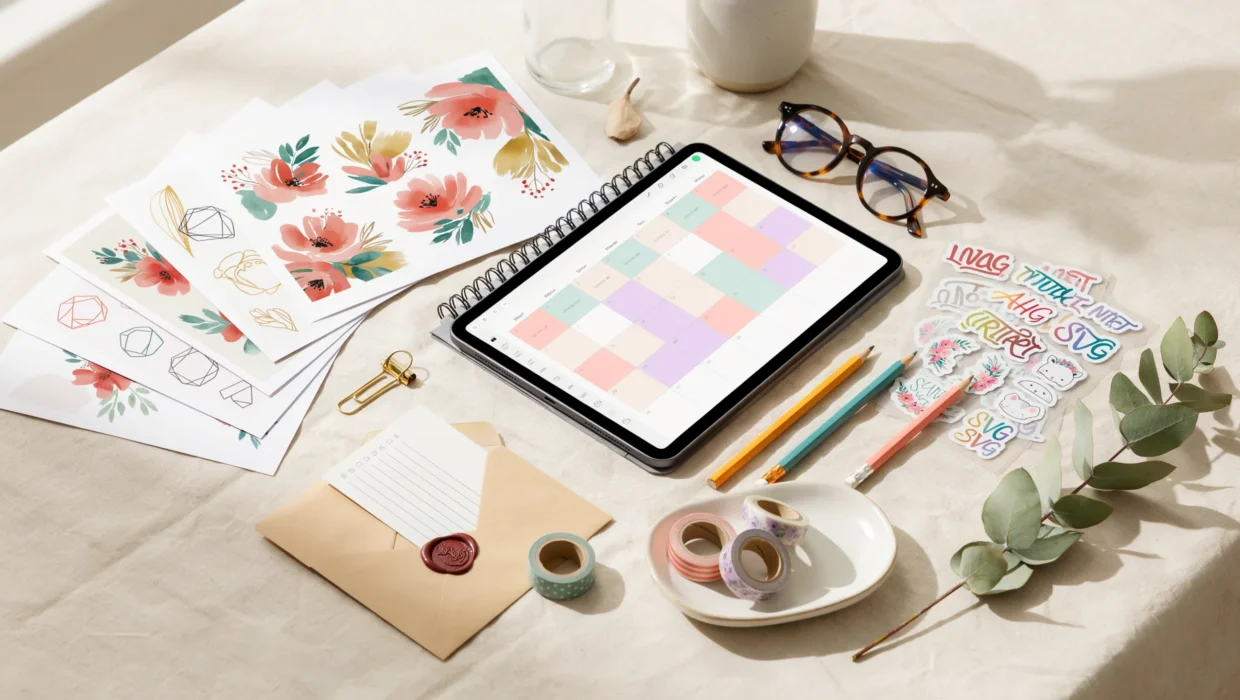
The best digital products to sell on Etsy are printables, planners, templates, SVG cut files, and digital wall art, because each one is made once and sold an unlimited number of times with no inventory and no shipping. That structure keeps roughly 80 to 90 percent of each sale after fees, which is why digital downloads remain one of the strongest entry points for new sellers.
Picking the right file to sell matters more than the format itself. A planner template with steady search demand will beat a beautiful piece of art that nobody is looking for. Below are nine digital categories worth building a shop around in 2026, who actually buys them, the real profit math, and how to check demand before you spend a weekend designing.
Why digital products beat physical goods on Etsy
A digital download has no per-unit cost. You build the file once, then every sale after that is the listing price minus Etsy’s fees. There is no printing, no postage, no trips to the post office, and no stockouts during a holiday rush. A single popular listing can sell hundreds of times while you sleep.
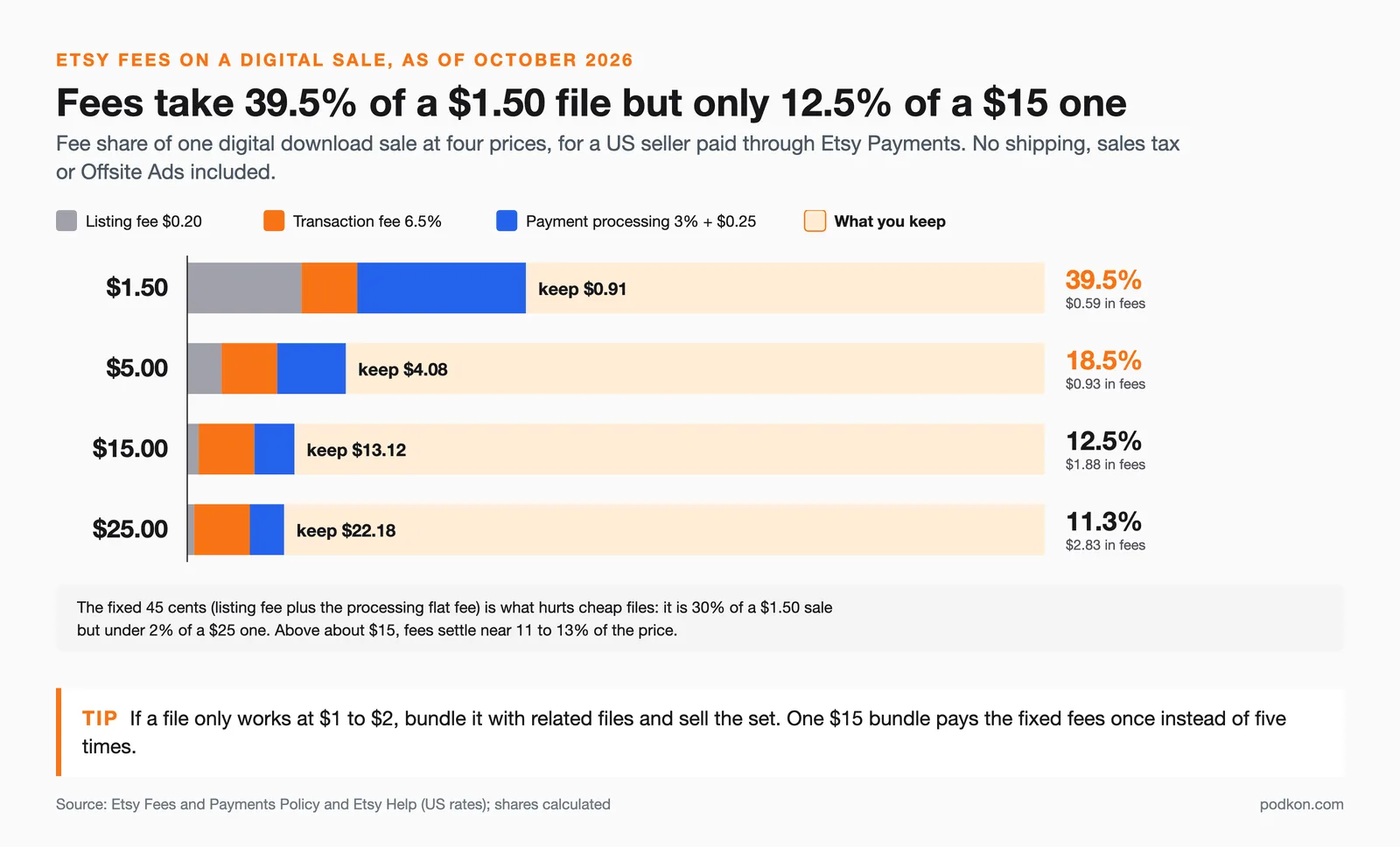
The math is hard to beat. Etsy charges a $0.20 listing fee, a 6.5 percent transaction fee, and payment processing of roughly 3 percent plus $0.25 per order (see Etsy’s Seller Handbook for current rates). On a $5 printable that works out to about $0.93 in fees, leaving you near $4.08. Sell that same file 200 times and you keep around $815 from a design you only made once.
🔢 Quick Numbers
- Etsy ended 2025 with 86.5 million active buyers on its core marketplace and $10.5 billion in marketplace gross merchandise sales (Etsy FY2025 results, via Business of Apps).
- Etsy’s core marketplace had about 5.6 million active sellers at the end of 2025 (Statista).
- Etsy’s standard transaction fee is 6.5 percent per sale (Etsy Seller Handbook).
There is one cost most beginners forget: your time. The first version of a planner or template can eat a full weekend. The difference with digital is that the cost stops there. A physical maker pays for materials on every single order, while you pay once and then collect on every copy. That is why a digital shop can scale to thousands of sales without you working more hours, and why even a modest catalog of 30 to 50 listings can turn into steady passive income once the right ones gain traction.
The trade-off is competition. Because the barrier to entry is low, popular formats like budget planners and wedding templates are crowded. That is exactly why demand research, covered at the end, decides whether your shop grows or stalls.
The 9 best digital products to sell on Etsy
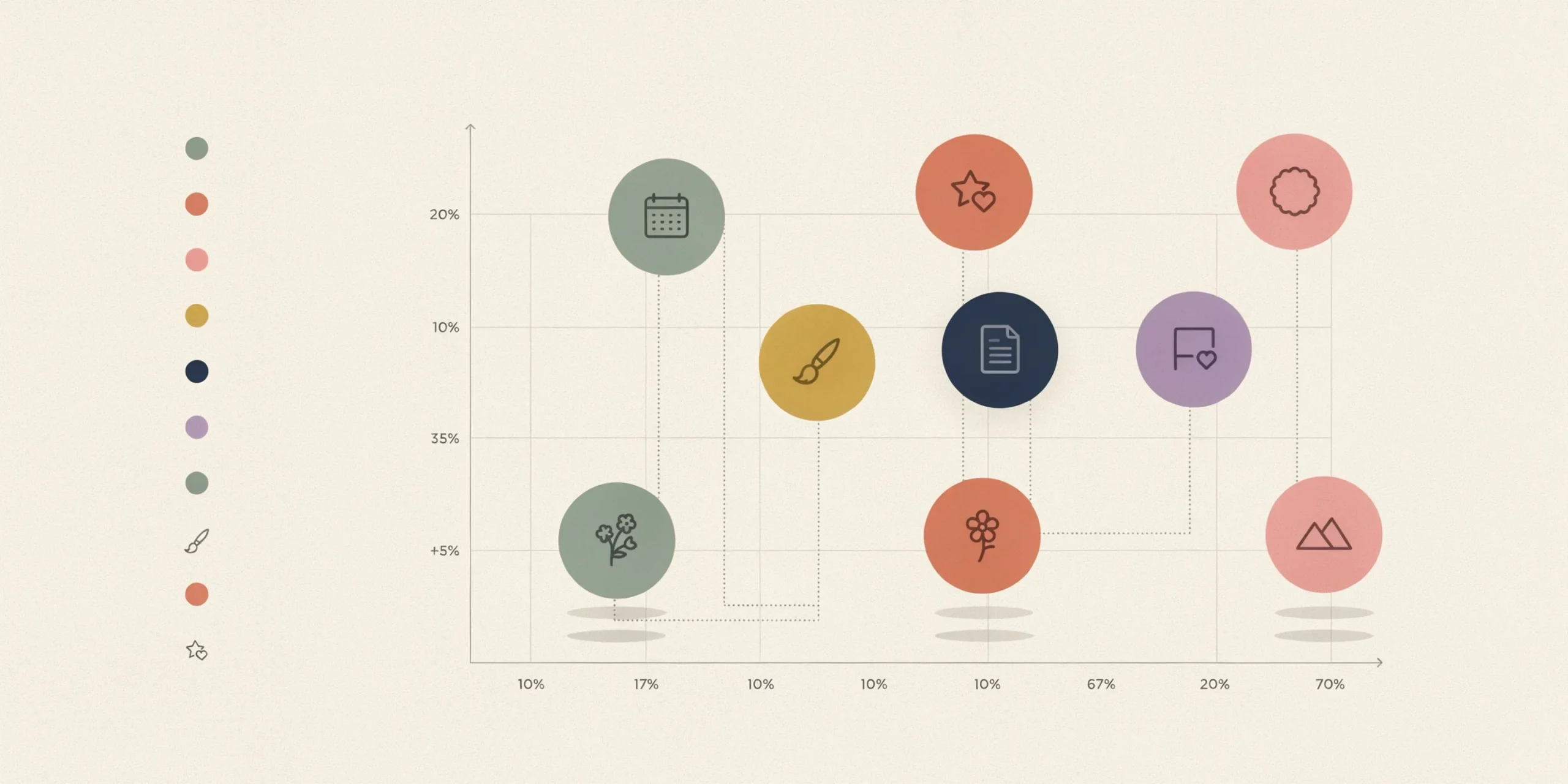
The table below ranks the nine categories by current demand, the design effort each one takes, and the type of seller it suits best. Use it to match a product to your own skills before you read the detail underneath.
Demand and effort at a glance
| Digital product | Demand | Effort | Best for |
|---|---|---|---|
| Printables (checklists, art prints, cards) | High | Low | Beginners testing a niche |
| Digital planners | High | Medium | Organized, detail-driven sellers |
| Canva and document templates | High | Medium | Designers who want repeat buyers |
| SVG and cut files | High | Medium | Cricut and craft hobbyists |
| Digital wall art | High | Low | Visual creators and AI-art makers |
| Spreadsheets (budget, trackers) | Medium | Medium | Finance and data-minded sellers |
| Sewing and craft patterns | Medium | High | Makers with a specialty craft |
| Fonts and digital assets | Medium | High | Type and graphic designers |
| Social media templates | High | Low | Sellers targeting small businesses |
1. Printables

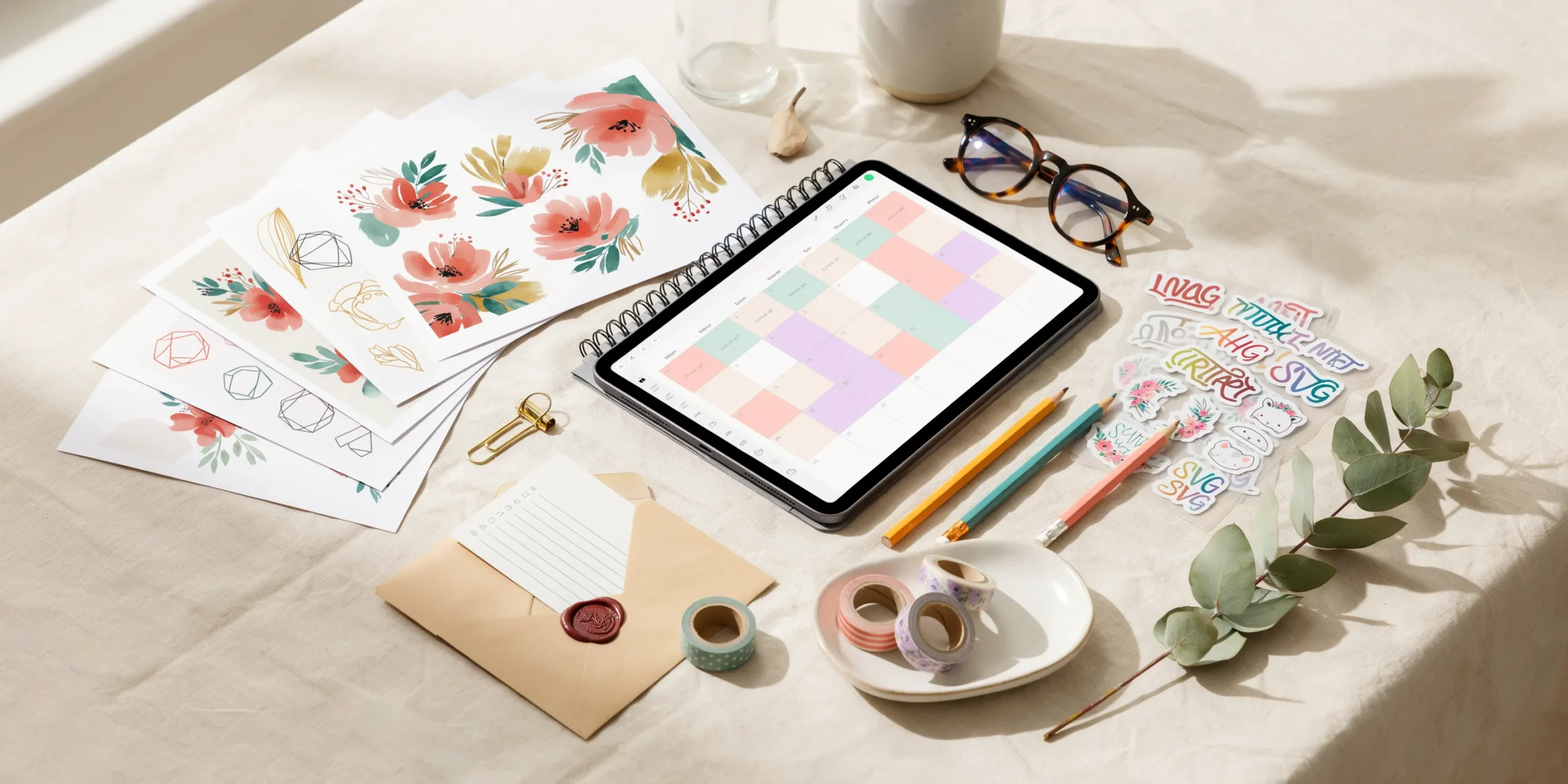
Printables are the gateway category: wall art, gift tags, greeting cards, party decor, and one-page checklists. They take the least design skill, sell for $2 to $8, and let you test a niche cheaply. The downside is volume competition, so a tight theme (Montessori toddler activities, for example) beats a generic “printable art” listing.
2. Digital planners
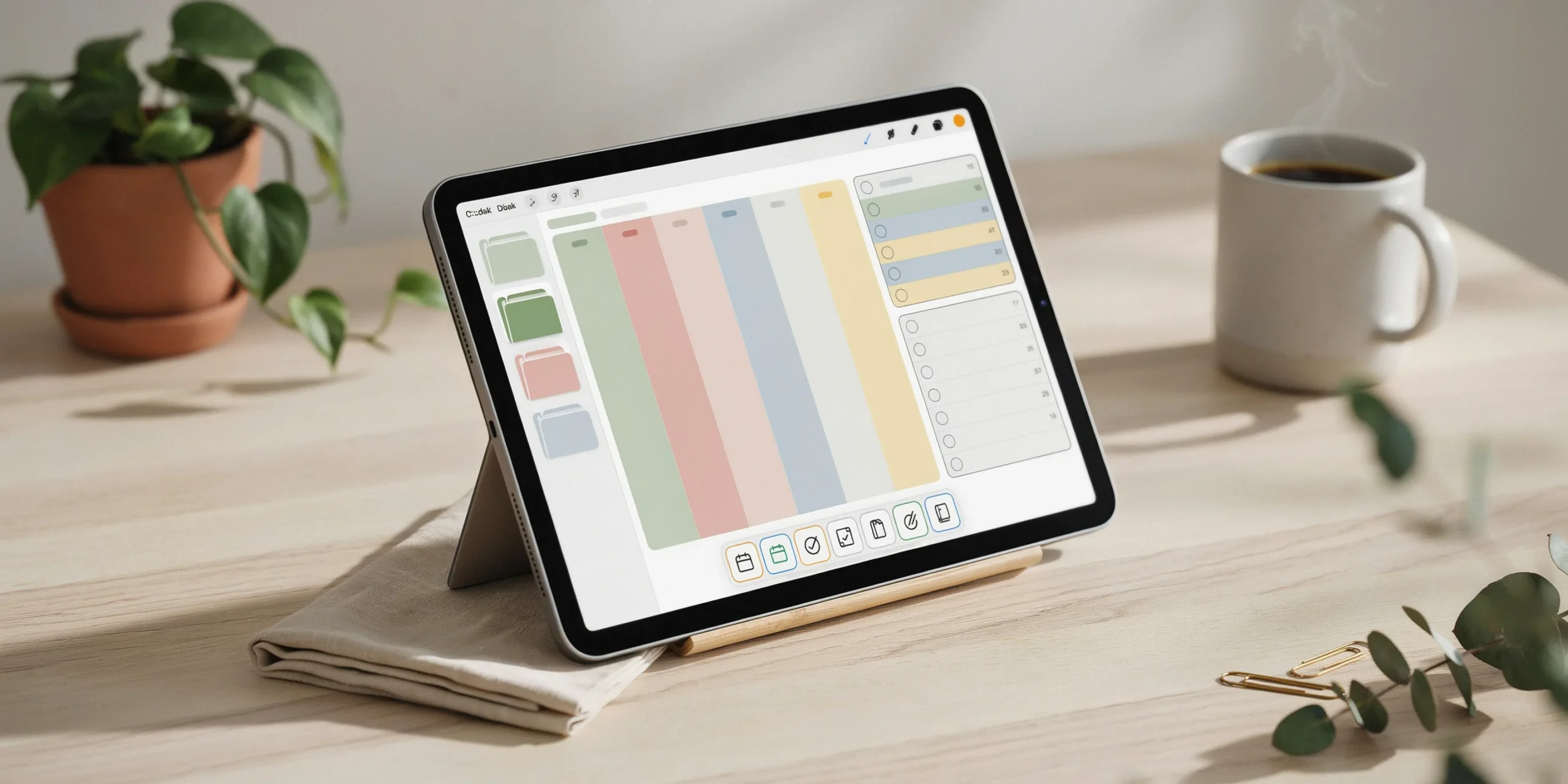
Planners for iPad apps like GoodNotes and Notability sell for $8 to $25 and attract repeat buyers who come back for dated yearly versions. They need hyperlinked pages and clean layout work, so the effort is higher, but the price point and loyalty are worth it.
3. Canva and document templates
Resume packs, invoices, menus, and small-business kits delivered as editable Canva or Word files are a steady seller because buyers want to customize, not just print. These create natural repeat customers, since a buyer who likes your resume template often returns for a matching cover letter.
💡 Seller Tip
Bundle related files instead of listing them one at a time. A buyer who needs a wedding invitation usually wants matching RSVP cards, signs, and thank-you notes too. A $15 bundle often converts better than four separate $5 listings and lifts your average order value.
4. SVG and cut files
SVG files for Cricut and Silhouette machines feed a large craft hobby audience that makes shirts, mugs, and decals. Seasonal designs (holidays, school, sports) sell in waves, so a calendar of themed drops keeps a cut-file shop busy year round.
5. Digital wall art
Buyers download a high-resolution file and print it themselves, which means instant delivery and no framing on your end. This is where AI image tools have pulled in new sellers, though the winning shops still apply a clear style and curate by room and color palette rather than dumping random images.
6. Spreadsheets
Google Sheets and Excel templates for budgeting, debt payoff, meal planning, and small-business bookkeeping serve buyers who want a working tool, not just a pretty page. They are harder to fake, which keeps competition lower and prices higher, often $10 to $30.
7. Sewing and craft patterns
PDF sewing, crochet, knitting, and quilting patterns sell to a devoted hobby crowd that buys repeatedly. The effort is real, since each pattern needs testing and clear instructions, but a maker with genuine expertise builds trust fast and faces fewer copycats.
8. Fonts and digital assets
Hand-lettered fonts, Procreate brushes, Lightroom presets, and clip-art packs sell to other creators. The skill bar is high and licensing needs to be spelled out, but a single popular font can earn for years with almost no upkeep.
9. Social media templates
Instagram post packs, Pinterest pin templates, and Story sets aimed at small-business owners and coaches are a fast-growing corner of the digital market. They are quick to produce in Canva and easy to refresh each season, which keeps a shop looking active.
📈 Trend Signal
Demand inside digital categories moves with the calendar. Wedding and party templates climb from spring into summer, planners and budget spreadsheets spike every December and January, and SVG cut files surge before each major holiday. Listing a seasonal product four to six weeks early is what separates a sale from a missed wave.
Who buys digital products on Etsy?
Digital buyers fall into a few clear groups, and knowing which one you serve sharpens every listing. Crafters and DIY hobbyists buy SVGs, patterns, and printables to make something themselves. Brides, party hosts, and event planners buy editable invitation and signage suites. Small-business owners and freelancers buy resumes, invoices, and social templates to look professional without hiring a designer. Students, parents, and budgeters buy planners and spreadsheets to stay organized.
Most of these buyers want the same two things: instant delivery and easy customization. A listing that states the file format, what is editable, and which app or printer it works with removes hesitation and cuts down on “does this work with X” messages.
Buyer intent also tells you how to price. Hobbyists comparing dozens of similar SVGs are price-sensitive, so cut files often sit at $2 to $5. Business buyers treat a $20 template as a tool that saves them hours, so they rarely blink at it. Match your price to what the buyer is replacing, not to what the cheapest competitor charges.
How to price digital products on Etsy
Pricing digital products is less about covering costs, since there are almost none per sale, and more about signaling value. A file priced at $1.50 reads as low quality even when it is excellent, and Etsy’s fees eat a bigger share of every tiny sale. Most digital sellers do better in the $5 to $25 range, with bundles pushing higher.
Three levers move your price up. Customization raises perceived value, so an editable template justifies more than a flat printable. Specificity helps too, because a planner built for nurses or real-estate agents commands more than a generic one. Finally, bundling lets you anchor a higher number while making each included file feel like a deal. Test two or three price points on your best listing and watch which one earns the most total profit, not just the most sales.
🛍️ Real Example
A seller who only makes editable Canva templates for dog-grooming businesses will outperform a generalist “templates for any business” shop on those searches. The narrow focus means tighter keywords, photos that speak to one buyer, and reviews from people in the same niche, all of which Etsy’s search rewards.
How to spot digital niches with real demand
The mistake that sinks most new digital shops is designing first and checking demand later. Flip the order. Before you open the design app, confirm that people are searching for the product and that the existing listings are not impossibly saturated.
Start inside Etsy itself. Type a product idea into the search bar and read the autocomplete suggestions, since those are real phrases buyers use. Then look at the top results: how many reviews do the bestsellers have, how recently are they reviewed, and how many shops are competing. A niche with steady sales but only a handful of strong shops is the sweet spot. Once you pick one, the right keywords in your titles and tags decide whether buyers ever find the listing, so pair your research with a solid Etsy SEO setup. Our guide on how to research an Etsy niche walks through this step by step, and the broader what to sell on Etsy guide covers category selection.
Manual checking gets you part of the way, but it is slow and easy to read wrong. Live sales data shows which digital products are actually moving right now versus which ones just look popular. Tracking that signal is how you catch a rising niche before the listings pile up, which is the whole point of watching what is selling on Etsy over time rather than guessing.
See what’s selling on Etsy right now
Choosing a digital product is really a demand question, not a design question. Podkon tracks live Etsy best-sellers and trends across every category, so you can find your next product before the niche gets crowded.
✅ Key Takeaways
- Digital products are made once and sold endlessly, with no shipping and roughly 80 to 90 percent of each sale kept after Etsy fees.
- Printables, planners, templates, SVG cut files, and wall art carry the highest demand for new sellers.
- Lower-effort formats face more competition, so a tight niche beats a generic catalog.
- Match the product to a specific buyer: crafters, brides, small businesses, or budgeters.
- Bundle related files to lift average order value and create repeat customers.
- Check live demand before you design, not after, to avoid building products nobody searches for.