


The Etsy search algorithm works in two stages: query matching pulls every listing whose text fits what a shopper typed, then a ranking system scores those listings on relevance, listing quality, recency, your shop’s service record, shipping price, language, and the shopper’s own context. Knowing which signal does what tells you exactly where to spend your effort.
Most sellers treat the Etsy search algorithm like a black box and copy whatever advice they find. The truth is more useful: Etsy publishes how its system works, and once you see each factor as a separate lever, you stop guessing. This is not a checklist of tactics. It is a plain explanation of the mechanism behind every search result, so you can decide what is worth your time and what is mostly out of your hands.
The two phases: query matching, then ranking
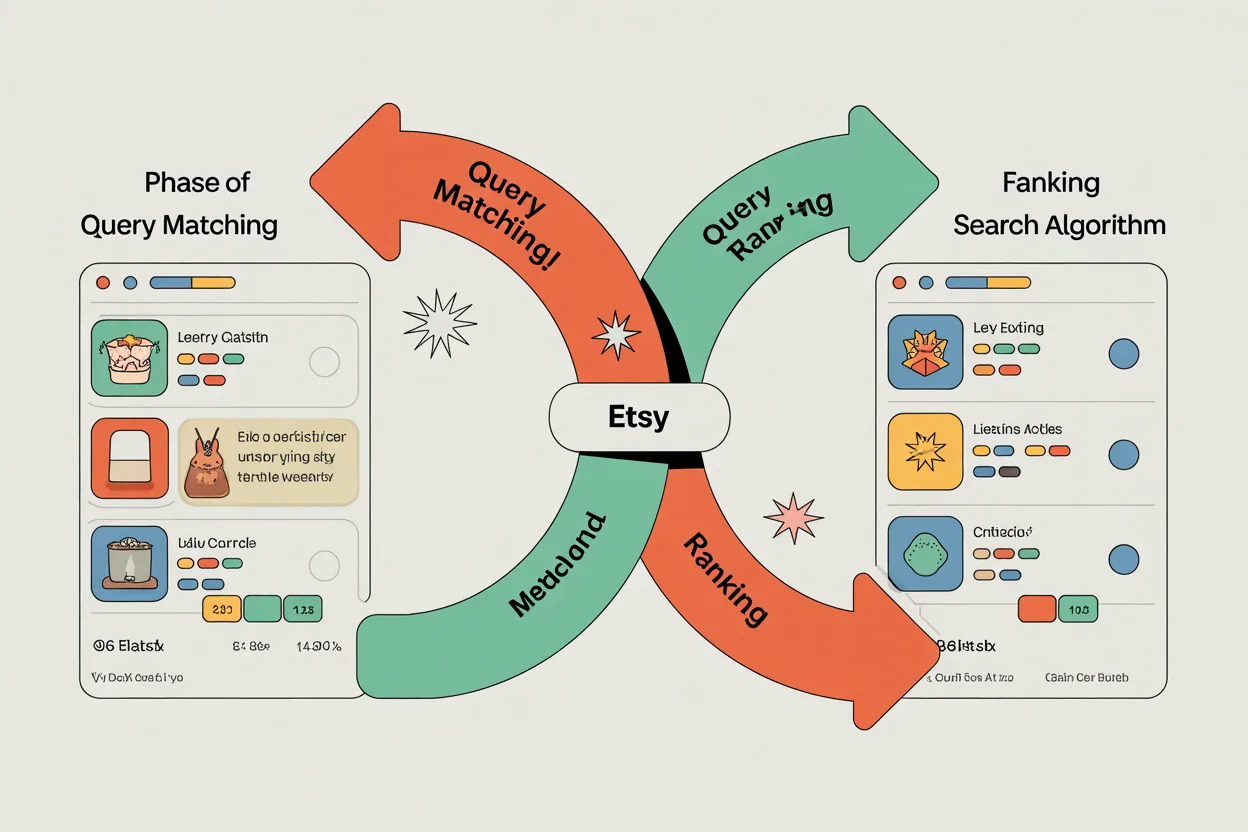
When a buyer types something into Etsy search, the system runs two distinct steps. First comes query matching. Etsy scans the keywords in your listing titles, tags, categories, and attributes and gathers every listing that could answer that search. According to Etsy’s How Etsy Search Works guide, this is purely about text: if your words do not match the query, your listing never enters the pool.
Second comes ranking. Out of the hundreds or thousands of matching listings, Etsy has to decide what order to show them in. This is where every other factor enters. Etsy’s ranking system scores each listing for how likely a shopper is to buy it, then sorts results from most to least likely. Everything below is a signal that feeds that score.
📈 Trend Signal
The biggest practical shift sellers report in 2026 is how much weight Etsy puts on real buyer behavior over perfect keywords. A listing that gets clicked and bought climbs faster than one with flawless tags but no engagement. Watching which product types are actually converting in your category, not just which keywords look good, is now the higher-value move.
Relevance: how closely your words match the search

Relevance measures how well the keywords in your title, tags, attributes, categories, and description line up with what the shopper typed. Etsy looks at where the match appears and how exact it is. An exact phrase match in your title carries more weight than the same words scattered across separate tags.
This is the factor you control most directly. Your title and tags are the raw material Etsy reads. Etsy front-weights words that appear early in the title, so your strongest buyer phrase belongs near the start. Attributes count too: filling in color, material, occasion, and style gives the algorithm structured data it trusts more than free text. For the full method on writing these, see our Etsy SEO guide and the deeper breakdown of how Etsy tags work.
💡 Seller Tip
Match the exact phrasing buyers use, not the phrasing you would use. Before you list, search your own product the way a customer would and note the autocomplete suggestions Etsy offers. Those suggestions are real queries, and using them word for word lifts your relevance score more than clever synonyms ever will.
Listing quality score: does your listing convert?
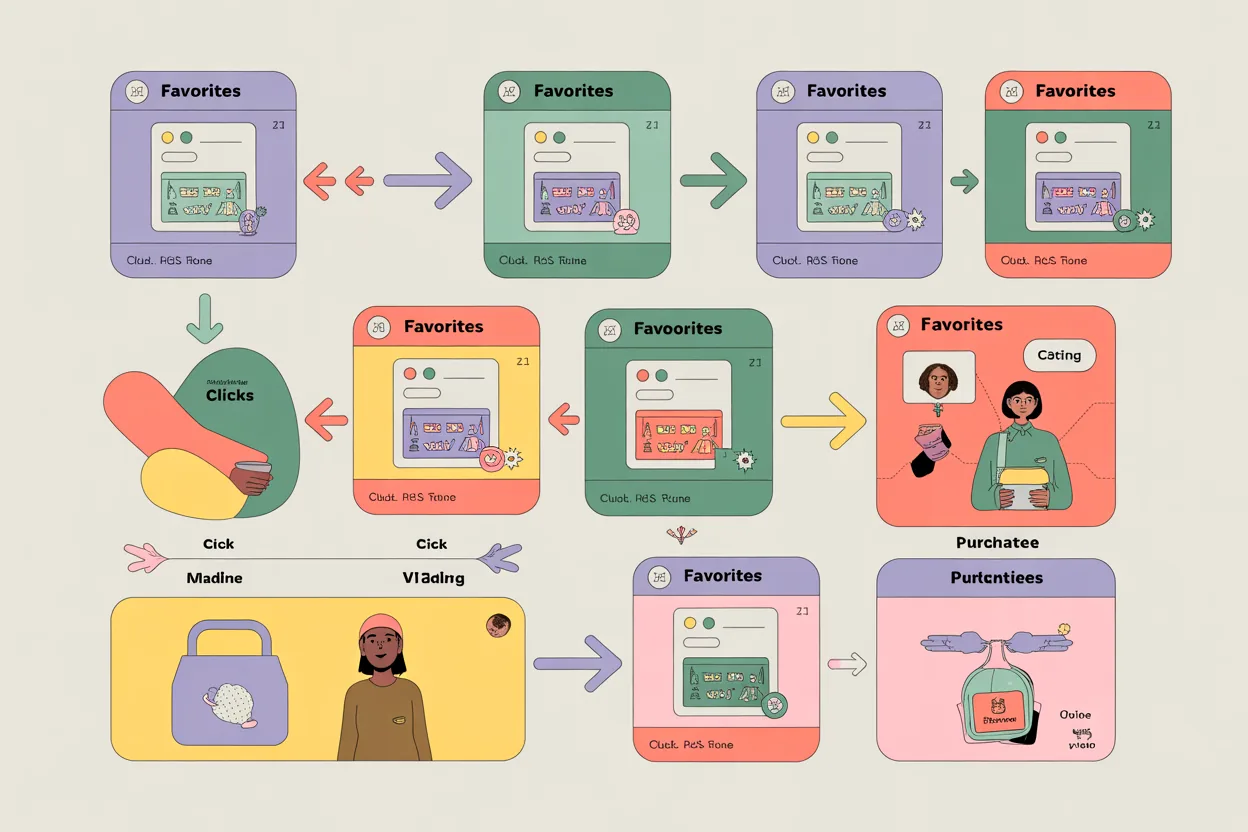
Once a shopper sees and clicks your listing, Etsy watches what happens next. The listing quality score reflects how often clicks turn into favorites, add-to-carts, and purchases relative to how many times the listing appears in search. A listing that earns a sale from many of its clicks signals to Etsy that it deserves a higher spot.
This is why two listings with identical keywords can rank worlds apart. Etsy is learning, listing by listing, which ones actually satisfy buyers. Strong photos, clear pricing, and a title that matches what the shopper expected all push this score up because they push the conversion rate up. You influence it indirectly through everything that affects whether a viewer buys.
Recency: the new-listing boost

When you publish or renew a listing, Etsy gives it a small, temporary lift in search. The point is data collection: Etsy needs to see how buyers interact with a fresh listing before it can assign a reliable quality score. During this window the algorithm is essentially auditioning your listing.
The boost is short and it does not repeat in a way that justifies constant renewing. Sellers report the learning window has tightened, often closer to two or three weeks than the month it once felt like, which means a poorly optimized listing burns its trial period without converting. Get the title, tags, photos, and price right before you hit publish, because the boost rewards listings that are ready, not listings that are merely new.
⚠️ Common Mistake to Avoid
Many sellers manually renew listings every day hoping to game the recency boost. Renewing costs a listing fee each time and gives only the same brief, fading lift. Spending that money and energy on better photos and tighter keywords does far more for long-term rank than chasing a temporary bump that the algorithm quickly discounts.
Customer and market experience score: your shop’s track record
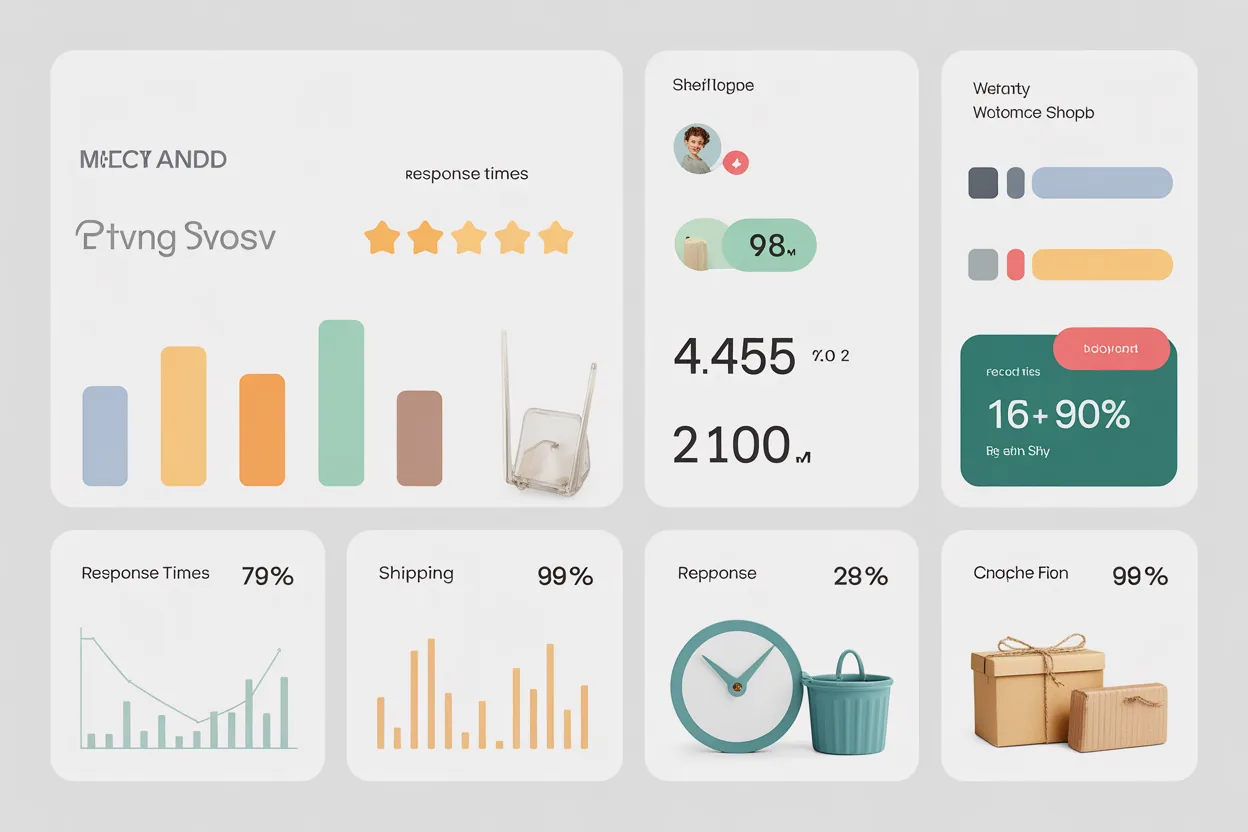
Etsy folds your shop’s service history into search ranking through what it calls the customer and market experience score. Shops that hold to Etsy’s service standards get prioritized. The inputs include your average review rating, your message response behavior, your on-time shipping record, and your case rate, generally measured over the recent past rather than your shop’s whole history.
This factor rewards consistency. A run of five-star reviews, fast replies to buyer messages, and few open cases tells Etsy that sending a shopper to your shop is a safe bet. It is slower to move than keywords, but it compounds: good service today protects your rank for months. Etsy explains the link between service standards and visibility in its own customer service and search ranking guidance.
📌 Did You Know?
Etsy’s Star Seller program tracks message response rate, on-time shipping and dispatch, and review rating over a rolling period. These are the same service behaviors that feed your customer experience score, so the habits that earn the badge are also the ones quietly supporting your search rank.

Shipping price: the under-six-dollar threshold
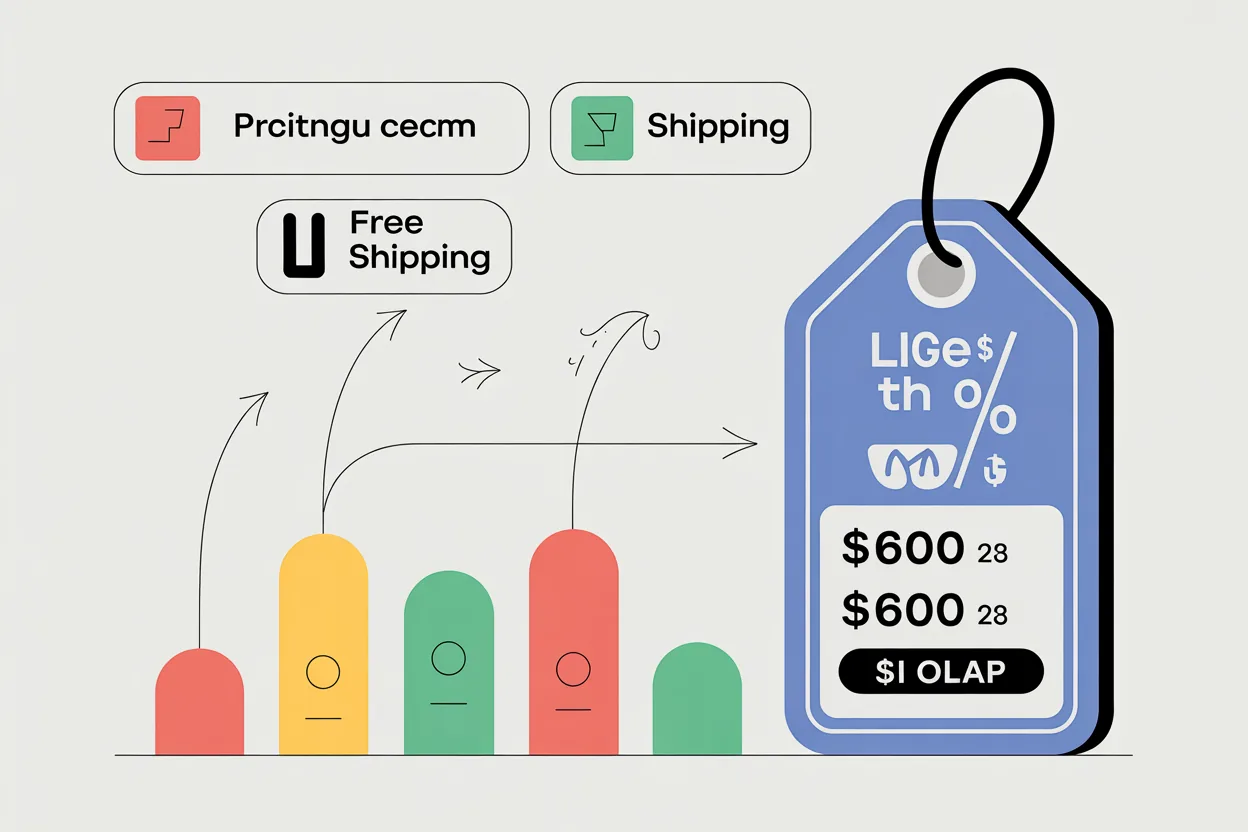
Shipping cost is a direct ranking input. Etsy states that US domestic listings with shipping priced under six dollars are prioritized in search, and shops offering free shipping or lower shipping to buyers in their own country may see a rank improvement. The logic is buyer-side: shoppers abandon listings when shipping feels like a surprise tax, so Etsy favors listings that keep the total honest.
You can influence this cleanly by building shipping into your item price and offering free shipping, or by keeping the posted shipping fee below that threshold. Run the math first, because absorbing shipping only helps if your margin survives it. For the full picture on setting this up, see our Etsy shipping guide.
Translations and language: matching the shopper’s settings

Etsy serves shoppers in many languages, and the algorithm tries to match listings to the language a buyer is searching in. Etsy machine-translates your titles, tags, and descriptions into other languages, but its own guidance notes that your manual translations tend to read more naturally and often perform better than the automatic version.
Write your listing in the single language you chose during shop setup rather than mixing languages in one field, which confuses query matching. If you reach buyers in another major market and you speak the language, adding your own translation can widen the pool of searches your listing matches and lift its relevance for those shoppers.
Geography and context specific ranking: the personalized layer

The last layer is the one you cannot edit, and that is the point. Etsy uses Context Specific Ranking, a system that learns each shopper’s habits and reshuffles results toward items that particular buyer is more likely to purchase. Two people typing the same query can see different orders based on their browsing and buying history. In some markets Etsy also prioritizes local shops, so geography nudges results too.
You do not control another person’s history, so do not try. What you can do is make your listing the strongest possible match on everything that does feed the personalized model: clear attributes, accurate categories, good photos, and a conversion record that tells the system buyers like yours are happy. Personalization amplifies listings that already perform, so the fundamentals still decide the outcome.
How the factors interact, and what you can actually move
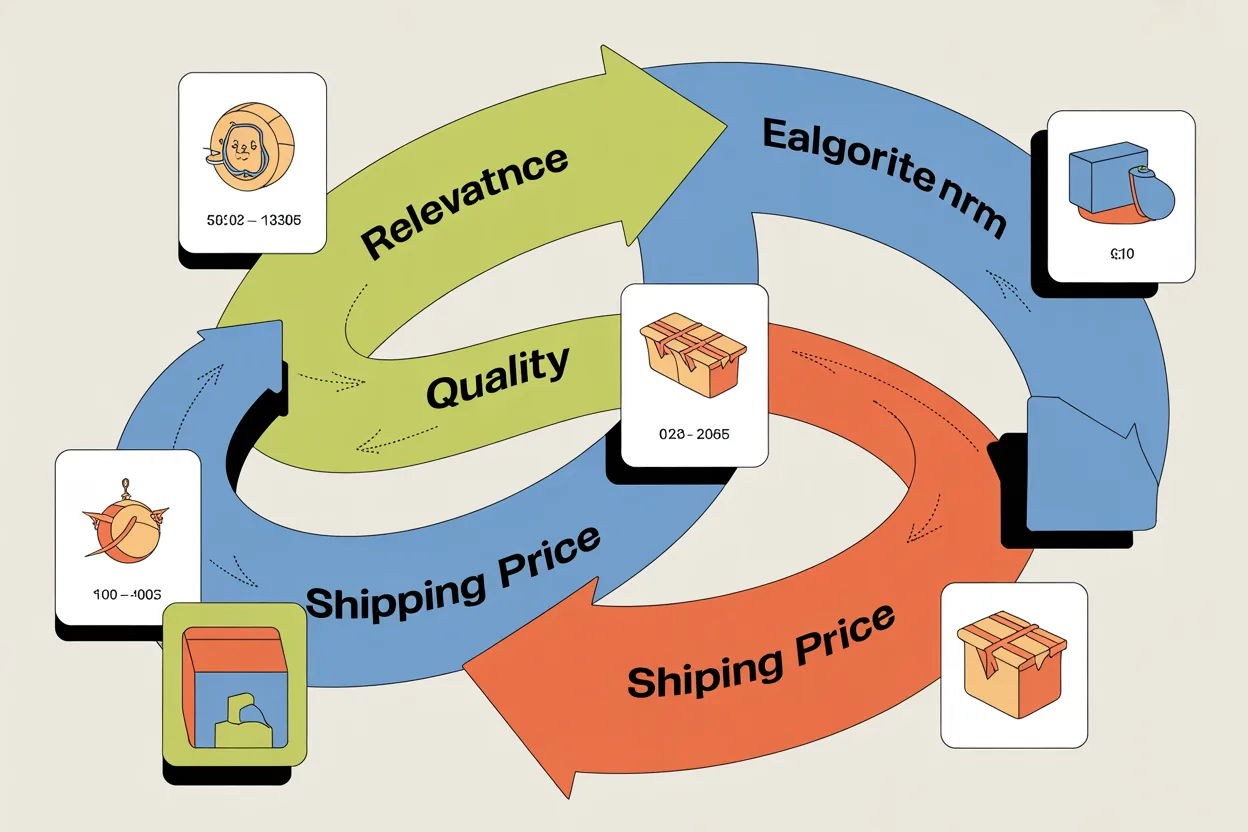
The Etsy search algorithm does not treat these signals as a ranked list where the top one wins. They stack. Relevance gets you into the results, listing quality and recency decide how high you start, shipping price and service score adjust your standing, and context specific ranking personalizes the final order for each shopper. A listing weak on any one factor leaks rank even when the others are strong.
Sort them by how much control you hold. You fully own your titles, tags, attributes, language, and shipping setup, so fix those first. You strongly influence listing quality through photos and pricing. You build service score slowly through reliable shipping and fast replies. You do not own personalization at all. Spending your hours where your control is highest is the whole strategy. To audit which products are worth optimizing in the first place, start with sound Etsy product research, and to streamline the work, compare the best Etsy seller tools.
See what’s selling on Etsy right now
Listing quality and conversion drive rank, so the listings that match real, current demand win the most. Podkon tracks live Etsy best-sellers and trends across every category, so you can check live demand before you list.
✅ Key Takeaways
- Etsy search runs in two phases: query matching by text, then ranking by score.
- Relevance, titles, tags, and attributes are the levers you control most directly.
- Listing quality score rewards listings that convert clicks into sales, not just keyword matches.
- The recency boost is a short trial, so optimize fully before you publish.
- Service record and shipping under six dollars feed rank over time.
- Context specific ranking personalizes results per shopper, so focus on what you can move.